
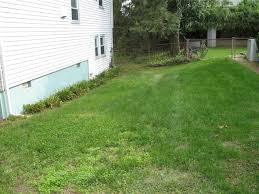
One of the most common ground-related problems inspectors encounter is also one of the simplest to understand.
The yard slopes toward the house instead of away from it.
This condition, known as negative grading, may appear harmless at first glance. But over time, it can expose the foundation of a home to constant moisture.
And moisture around foundations is rarely a good thing.
What Proper Grading Is Supposed to Do
A home’s grading is designed to direct surface water away from the structure.
Ideally, the soil around the house should slope downward for several feet away from the foundation.
This ensures that rainwater and melting snow flow away from the building rather than collecting around it.
Most guidelines recommend a slope of approximately 6 inches over the first 10 feet away from the home.
When this slope exists, water naturally drains away from the foundation.
What Happens with Negative Grading
When the ground slopes toward the house, water behaves very differently.
Instead of draining away, water flows directly toward the foundation walls.
After heavy rainfall, this can result in water pooling near the base of the home.
Over time, repeated saturation of the surrounding soil increases moisture levels around the foundation.
This can lead to several problems:
- basement seepage
- crawlspace moisture issues
- foundation settlement
- increased hydrostatic pressure on basement walls
Each of these conditions can affect the long-term stability of the structure.
Why Negative Grading Develops
In many homes, grading problems were not present when the house was originally built.
They develop gradually over time.
Several factors contribute to changing yard slopes:
- soil settling near the foundation
- erosion from rainfall
- landscaping changes
- installation of sidewalks or patios
- repeated addition of mulch near the house
Even small changes in grade can eventually alter how water flows across the property.
The Problem with Hard Surfaces
Driveways, sidewalks, and patios can also contribute to drainage issues.
When these surfaces slope toward the house, they act like channels directing water directly to the foundation.
Unlike soil, hard surfaces do not absorb water.
Instead, they quickly move water across the surface toward the lowest point.
If that low point happens to be the foundation wall, water accumulates exactly where it is least desirable.
The Long-Term Structural Effects
When soil around a foundation remains wet for extended periods, several structural issues may develop.
Saturated soil can lose its ability to support weight effectively.
In clay soils, moisture fluctuations can cause the soil to expand and contract dramatically.
These changes can place stress on foundation walls and footings.
Over time, homes with poor drainage may experience:
- foundation cracking
- wall bowing
- uneven floor settlement
While drainage problems often develop slowly, their effects can be significant.
What Inspectors Look For
During a grounds inspection, experienced inspectors evaluate the slope of the soil around the home.
They also look for signs that water may be collecting near the foundation.
These clues may include:
- visible depressions in the soil
- water stains on foundation walls
- erosion channels near the home
- vegetation patterns indicating frequent moisture
Even subtle grading issues are worth noting because they often worsen over time.
Why Drainage Is One of the Most Important Site Conditions
Many homeowners focus on cosmetic improvements such as landscaping or exterior finishes.
But proper drainage is far more important to the long-term health of a structure.
Water is one of the most destructive forces affecting residential buildings.
Ensuring that water flows away from the home is one of the simplest ways to protect the foundation.
Sometimes the most important structural protection a house has is not hidden in the walls or beneath the floors.
It’s the slope of the soil outside.

