
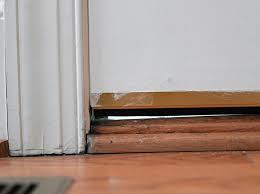
One of the most valuable skills a home inspector develops over time is the ability to recognize subtle clues inside a house that point to much larger structural conditions.
And one of the most revealing clues is something homeowners see every day but rarely think about:
doors that don’t fit their frames properly.
A door that sticks, drags, or refuses to latch isn’t always just a minor carpentry problem. In many cases, it’s a sign that the structure of the house has shifted slightly.
When a house moves—even a little—the rectangular openings designed for doors and windows are often the first places where that movement becomes visible.
Why Door Frames Are So Sensitive to Movement
Door openings are carefully framed to create square, stable openings in the structure.
When a house is built, the framing around doors is designed to remain rigid so the door can swing freely within the frame.
But homes rarely remain perfectly static.
Over time, foundations settle, floor systems shift slightly, and structural loads redistribute as materials age and dry.
Even a small amount of movement can distort the shape of a doorway.
Because doors rely on precise alignment, even minor distortion can cause operational problems.
The Most Common Signs Inspectors Notice
During interior inspections, experienced inspectors often check how doors operate throughout the house.
Several patterns can suggest structural movement.
These include:
- doors that rub against the top of the frame
- doors that swing open or closed on their own
- doors that no longer latch without force
- uneven gaps around the edges of the door
The pattern of the misalignment can reveal a lot about what may be happening structurally.
For example, when the top corner of the door frame becomes tight while the opposite bottom corner develops a larger gap, the doorway has likely shifted out of square.
When It’s Just Seasonal Movement
Not every sticking door indicates a structural problem.
Wood framing naturally expands and contracts with changes in humidity and temperature.
Seasonal moisture changes can cause doors to swell slightly or frames to shift just enough to affect operation.
This is particularly common in regions with large seasonal humidity swings.
However, when multiple doors throu

