
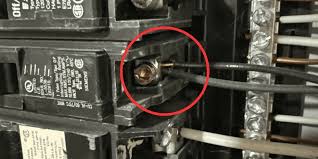
If you read enough home inspection reports, you will eventually see a comment about double-tapped breakers. Sometimes the inspector calls it a defect. Other times it is described as acceptable. Occasionally it’s not mentioned at all.
To a home buyer, that inconsistency can be confusing.
But the reality is that double tapping a breaker is one of those electrical conditions where the details matter, and many inspectors misunderstand what they are actually looking at.
What a Double-Tapped Breaker Actually Is
A double-tapped breaker occurs when two conductors are connected to a single breaker terminal designed to accept only one wire.
Instead of this:
• One breaker → one wire
You see this:
• One breaker → two wires under the same screw terminal
It’s a common sight in older electrical panels where circuits were added over time but the panel had no remaining breaker spaces.
Rather than installing a subpanel or tandem breaker, someone simply stacked two wires under the same breaker lug.
Why It Can Be a Safety Problem
Most standard breakers are designed for a single conductor under the terminal screw.
When two wires are placed under a terminal that was designed for one, several problems can occur.
First, the pressure from the terminal screw may not clamp both wires evenly. One conductor may be secure while the other remains loose.
Second, electrical conductors expand and contract slightly with heat cycles as current flows through them. If the terminal is not gripping the wires evenly, one conductor can gradually loosen over time.
A loose conductor creates resistance, and resistance creates heat.
In extreme cases this can lead to:
- melted insulation
- arcing at the terminal
- breaker damage
- localized overheating inside the panel
While it may not cause an immediate failure, it is considered a reliability and safety concern.
Why Some Breakers Are Designed for Two Wires
Here’s where things get interesting.
Not all double taps are defects.
Some breakers are specifically listed and labeled to accept two conductors.
For example, certain breakers manufactured by companies like Square D or Cutler-Hammer have terminal designs that allow two wires to be secured properly under a single screw.
These breakers typically include markings on the breaker body indicating that two conductors are permitted.
The terminal clamp is shaped differently so it can secure both wires evenly.
When used correctly, this configuration is not considered a defect.
The problem is that many inspectors don’t verify whether the breaker is actually rated for two wires.
They simply see two conductors and write it up automatically.
The More Subtle Problem: Mixed Wire Sizes
Even when a breaker technically allows two conductors, another issue often appears.
The two wires are frequently different sizes.
For example:
- one 12-gauge wire
- one 14-gauge wire
When different conductor sizes are placed under the same terminal, the clamp cannot secure both wires evenly. The smaller wire may not be held tightly enough, even if the breaker technically allows two conductors.
This is a condition that deserves attention, even if the breaker itself allows two wires.
Why Double Taps Often Reveal Something Else
In many homes, double-tapped breakers are not the real problem.
They are a symptom of panel overcrowding.
When someone adds circuits over time—finished basements, garages, additional outlets, hot tubs, or sheds—the electrical panel eventually runs out of spaces.
Instead of upgrading the panel or installing a subpanel, the person doing the work improvises.
The result may include:
- double-tapped breakers
- tandem breakers where they are not allowed
- shared neutrals without proper handle ties
- overcrowded conductors inside the panel
When inspectors see one double tap, it often suggests that the electrical system has been modified repeatedly without a comprehensive plan.
How Inspectors Typically Recommend Repair
The most common correction is simple.
An electrician can:
- install an approved tandem breaker (if the panel allows it)
- add a new breaker and separate the circuits
- install a subpanel to create additional breaker spaces
These solutions eliminate the need to stack conductors under a single terminal.
The goal is not just code compliance—it’s long-term reliability of the electrical system.
Why Inspectors Should Look Beyond the Obvious
One of the most valuable habits a home inspector can develop is asking:
“Why did this happen?”
A double-tapped breaker is rarely just a single isolated issue.
It often indicates:
- panel capacity limits
- undocumented electrical modifications
- circuits added without permits
- DIY electrical work performed over decades
Recognizing that broader context helps inspectors provide clients with a clearer understanding of the electrical system as a whole, rather than simply listing a minor defect.
Because in many homes, the double-tapped breaker is not the real story.
It’s just the first clue.

