
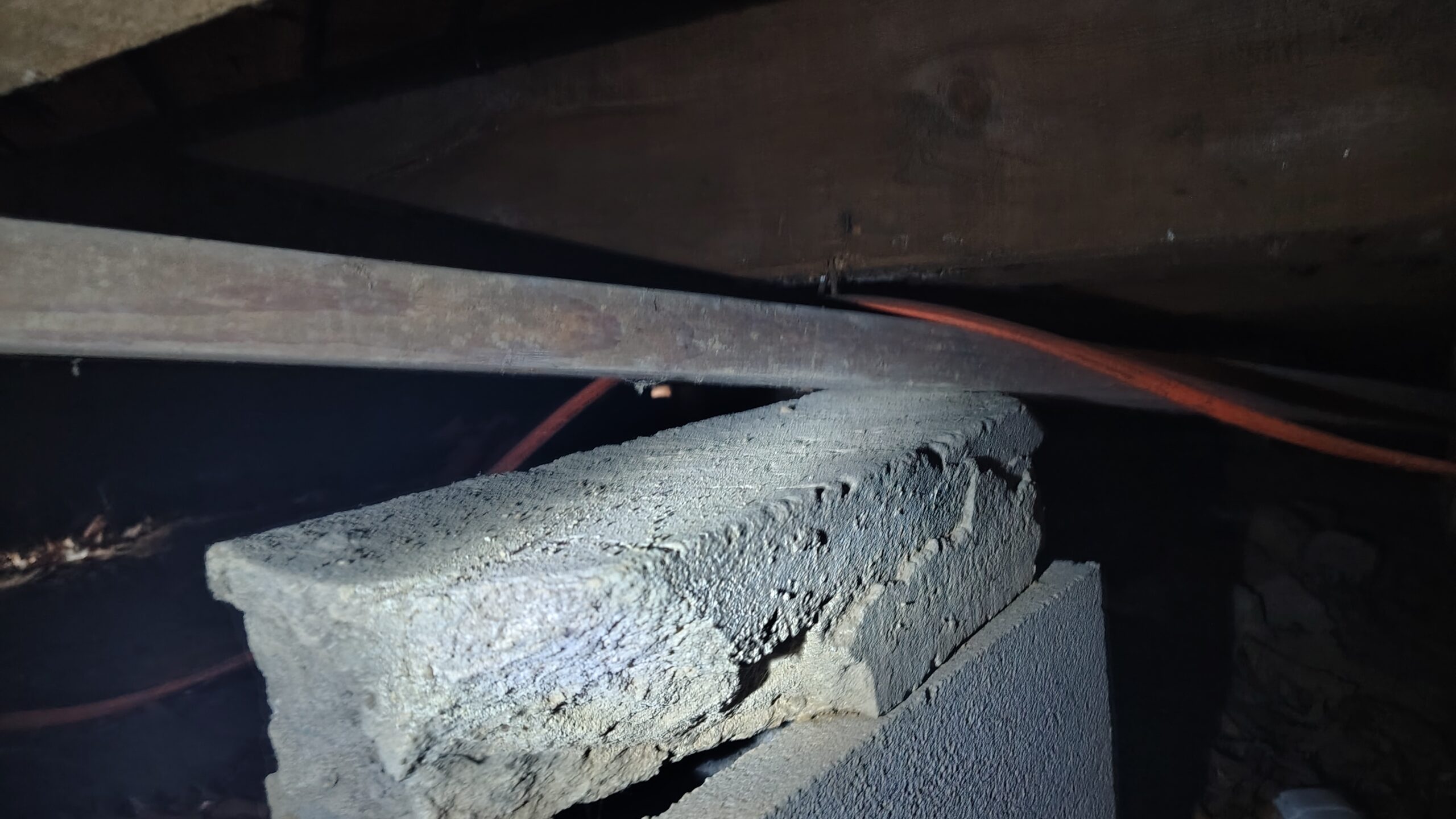
Crawlspace foundations are common across much of the United States, particularly in older homes.
At first glance, these systems appear simple: beams run beneath the floor structure and are supported by masonry piers or posts that transfer the weight of the home into the soil below.
But during crawlspace inspections, experienced inspectors occasionally encounter something surprising.
Support piers that are no longer supporting the house at all.
In some cases, there is a visible gap between the beam and the pier beneath it.
The pier is still standing—but it isn’t carrying any load.
How This Happens
When a home is originally built, the support piers are positioned beneath structural beams to distribute weight evenly across the foundation.
Over time, however, several things can change.
The soil beneath the crawlspace may shift, compress, or erode. Moisture conditions can soften supporting soils, allowing piers to settle slightly.
In other situations, the wooden beams themselves shrink as the lumber dries and ages.
The result is that the original contact between beam and pier gradually disappears.
Instead of supporting the structure, the pier is simply sitting below it.
Why Floating Piers Matter
At first glance, a floating pier may not seem like a serious problem.
After all, the house is still standing.
But the absence of support in one location means that structural loads have shifted elsewhere. Other piers and beams may now be carrying more weight than originally intended.
Over time, this uneven load distribution can lead to:
- sagging floors
- uneven floor surfaces
- cracked drywall or ceiling joints
- doors that no longer close properly
In severe cases, unsupported beams may begin to deflect significantly.
The Clue Inspectors Look For
Identifying floating piers requires careful observation in the crawlspace.
Inspectors often look for:
- visible gaps between beams and piers
- wood shims that have fallen out of place
- crushed or deteriorated shims
- beams that appear unsupported along long spans
Sometimes the gap is only a fraction of an inch.
But even a small gap means the pier is not actively carrying load.
Why Improvised Repairs Can Make It Worse
Homeowners sometimes attempt to correct sagging floors by adding makeshift supports.
These repairs may include:
- stacked concrete blocks
- wood scraps used as shims
- bricks or stones placed beneath beams
While the intention is understandable, these improvised solutions often fail to provide stable structural support.
Blocks placed on bare soil may settle further over time, and wood shims can compress or deteriorate in the humid environment of a crawlspace.
Proper support systems typically require stable footings and solid load transfer between the beam and supporting pier.
Moisture Often Plays a Role
Crawlspace moisture conditions frequently contribute to foundation movement.
High humidity levels and standing water can weaken soil beneath support piers, allowing them to settle gradually.
Over time, the structure adjusts to the new conditions—sometimes leaving previously installed supports behind.
This is why evaluating crawlspace moisture conditions is just as important as examining the structural components themselves.
Why This Is Easy to Miss
Floating piers are easy to overlook because they do not always cause dramatic symptoms.
From inside the house, the floors may appear only slightly uneven, or the movement may be gradual enough that occupants do not notice it.
But beneath the home, the structural system may already be redistributing loads in unintended ways.
For inspectors willing to spend time carefully examining crawlspaces, these subtle details can reveal important information about how the foundation is performing.
Because sometimes the most revealing sign of a foundation issue isn’t a cracked wall or leaning structure.
It’s a support pier quietly standing beneath a beam—without touching it.

