
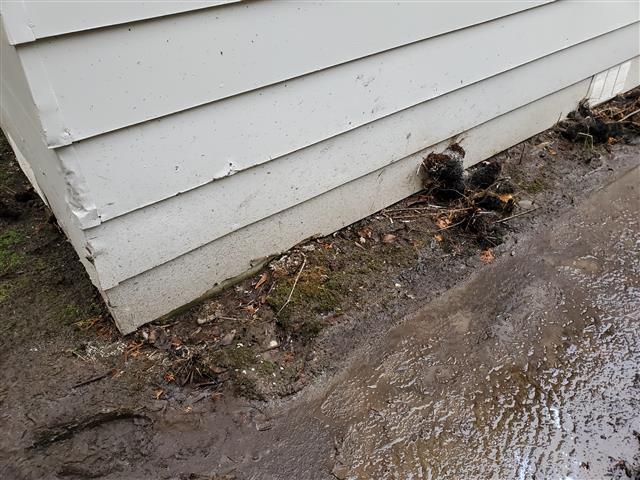
One of the most overlooked exterior defects inspectors encounter is also one of the most destructive over time: improper clearance between siding and the ground.
It’s a small detail that often goes unnoticed by homeowners and even contractors. But when siding materials are installed too close to the soil, moisture problems begin almost immediately.
And once moisture gets trapped in wall systems, damage can progress silently for years.
Why Clearance Matters
Exterior wall systems are designed to shed water. Rain runs down the siding, away from the structure, and eventually reaches the ground.
But siding materials—especially wood-based products—are not meant to remain in constant contact with soil or mulch.
Most manufacturers require at least 6 inches of clearance between siding and finished grade.
This separation allows air circulation and prevents soil moisture from wicking into the siding material.
When that clearance disappears, moisture has nowhere to go.
The Moisture Wicking Effect
Soil acts like a sponge.
After rainstorms, irrigation, or snow melt, the ground remains damp long after surfaces appear dry.
When siding materials touch or nearly touch the soil, moisture can move upward through a process called capillary action.
Wood siding, fiberboard products, and some composite materials can absorb moisture directly from the soil.
Over time this leads to:
- swelling siding panels
- soft or deteriorating wood
- paint failure and peeling
- hidden rot within the wall assembly
In some cases, the damage begins at the bottom edge of the siding and slowly works upward into the wall framing.
Mulch Makes the Problem Worse
Landscaping mulch is one of the biggest contributors to siding clearance problems.
Homeowners often add mulch around foundations to improve the appearance of flower beds.
Each new layer raises the grade slightly higher.
Over several seasons, mulch beds can rise several inches above their original level—eventually burying the bottom edge of the siding.
Now the wall system is in direct contact with moisture-retaining organic material.
Mulch also attracts insects that thrive in damp environments.
Pest Entry Points
Improper siding clearance doesn’t just cause moisture problems.
It also creates easy entry points for pests.
Termites, carpenter ants, and other wood-destroying insects prefer environments where wood remains close to soil and protected from sunlight.
When siding touches the ground, it forms a hidden bridge between the soil and the structure.
In some cases, termite activity can begin in the siding itself before spreading into structural framing.
Proper clearance makes these entry paths much harder for pests to access.
The Hidden Structural Damage
One of the challenges with siding clearance issues is that the damage is often concealed.
The exterior siding may look only slightly weathered at the bottom edge.
But behind that siding, the wall sheathing and framing can already be deteriorating.
Because the damage occurs at the lowest portion of the wall, it may remain hidden until:
- siding panels begin separating
- interior floor areas develop moisture problems
- or significant structural decay becomes visible
By the time the issue is obvious, repairs can become far more extensive.
What Inspectors Look For
Experienced inspectors evaluate several factors when examining siding near ground level.
These include:
- clearance between siding and soil
- evidence of mulch buildup around the foundation
- deteriorated siding edges
- staining or swelling at the bottom of siding panels
- vegetation growing against exterior walls
Even when damage is not yet visible, insufficient clearance is worth noting because of the potential long-term consequences.
Why This Small Detail Matters
Many exterior problems develop slowly.
Improper siding clearance is one of those issues that may not cause immediate failure, but over time it creates the perfect conditions for moisture intrusion and hidden rot.
Maintaining proper clearance is a simple preventive measure that protects both the exterior finish and the structural components of the wall.
Because sometimes the biggest problems start with something as simple as a few inches of soil in the wrong place.

