
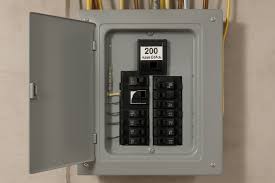
One of the most misunderstood phrases in residential real estate is “200-amp service.”
You’ll hear it constantly:
- Real estate listings advertise it.
- Sellers mention it proudly.
- Buyers assume it means the house has plenty of electrical capacity.
But here’s the uncomfortable truth many experienced inspectors eventually learn:
Just because a home has a 200-amp panel does not mean it actually has a true 200-amp electrical service.
And in many homes, it absolutely does not.
The Panel Is Only One Piece of the System
When people say “200-amp service,” they usually mean the main breaker inside the electrical panel is rated for 200 amps.
But the electrical service to a house is made up of several components:
• Utility service drop or lateral
• Meter base
• Service entrance conductors
• Main disconnect or breaker
• Panel bus rating
For a house to truly have a 200-amp service, every one of those components must support 200 amps.
If any part of the system is smaller, the service is effectively limited to the smallest component.
This is where the confusion starts.
The “Panel Upgrade” Shortcut
Over the past 30 years, many homes have had what electricians call a panel upgrade.
The old fuse box or outdated panel gets replaced with a modern breaker panel.
Often that new panel has a 200-amp rating.
But here’s the catch:
Sometimes the electrician replaces only the panel, leaving the existing service entrance conductors and meter base in place.
Those components may still be sized for 100 or 125 amps.
The result is a house that appears to have a 200-amp service but is actually limited by the original wiring feeding the panel.
The Clue Inspectors Look For
Experienced inspectors know that the panel rating alone doesn’t tell the whole story.
Instead, they look at the service entrance conductors feeding the meter and panel.
Typical conductor sizes include:
• #4 aluminum — often associated with 100 amp services
• 1/0 aluminum — commonly used for 150 amp services
• 2/0 aluminum — typical for 200 amp services
If a panel has a 200-amp main breaker but the service conductors are sized for 100 amps, the panel rating becomes largely irrelevant.
The electrical system is only as large as its smallest upstream component.
Why This Happens So Often
Electrical upgrades can be expensive.
A true 200-amp service upgrade may require:
- replacing the meter base
- upgrading the service entrance conductors
- coordinating with the utility company
- installing a new grounding system
- possibly upgrading the mast or service drop
That work can cost several thousand dollars.
By contrast, simply replacing the panel is far cheaper.
So over the years, many houses received partial upgrades that created the illusion of increased electrical capacity without actually increasing the service size.
The Real-World Impact
For many homes, this distinction doesn’t cause immediate problems.
But it becomes important when homeowners begin adding modern electrical loads, such as:
- EV chargers
- hot tubs
- electric tankless water heaters
- induction ranges
- large HVAC systems
- workshop equipment
Homeowners assume they have 200 amps available.
But if the service conductors are smaller, the system may already be operating closer to its true capacity than anyone realizes.
Why Inspectors Should Be Careful With This Topic
Electrical service calculations are complex.
Home inspectors typically do not perform formal load calculations, which require detailed analysis of connected loads.
However, inspectors can observe and report conditions that suggest the electrical service may not match the panel rating.
When a 200-amp panel is paired with smaller service conductors, it raises a legitimate question about whether the service upgrade was completed properly.
That question is worth documenting.
The Takeaway for Inspectors
The lesson here is simple.
Never assume the panel rating tells the whole story.
When evaluating an electrical system, experienced inspectors look at the entire service assembly, not just the breaker at the top of the panel.
Because in many homes, the “200-amp service” everyone talks about exists only on the label of the panel door.

