
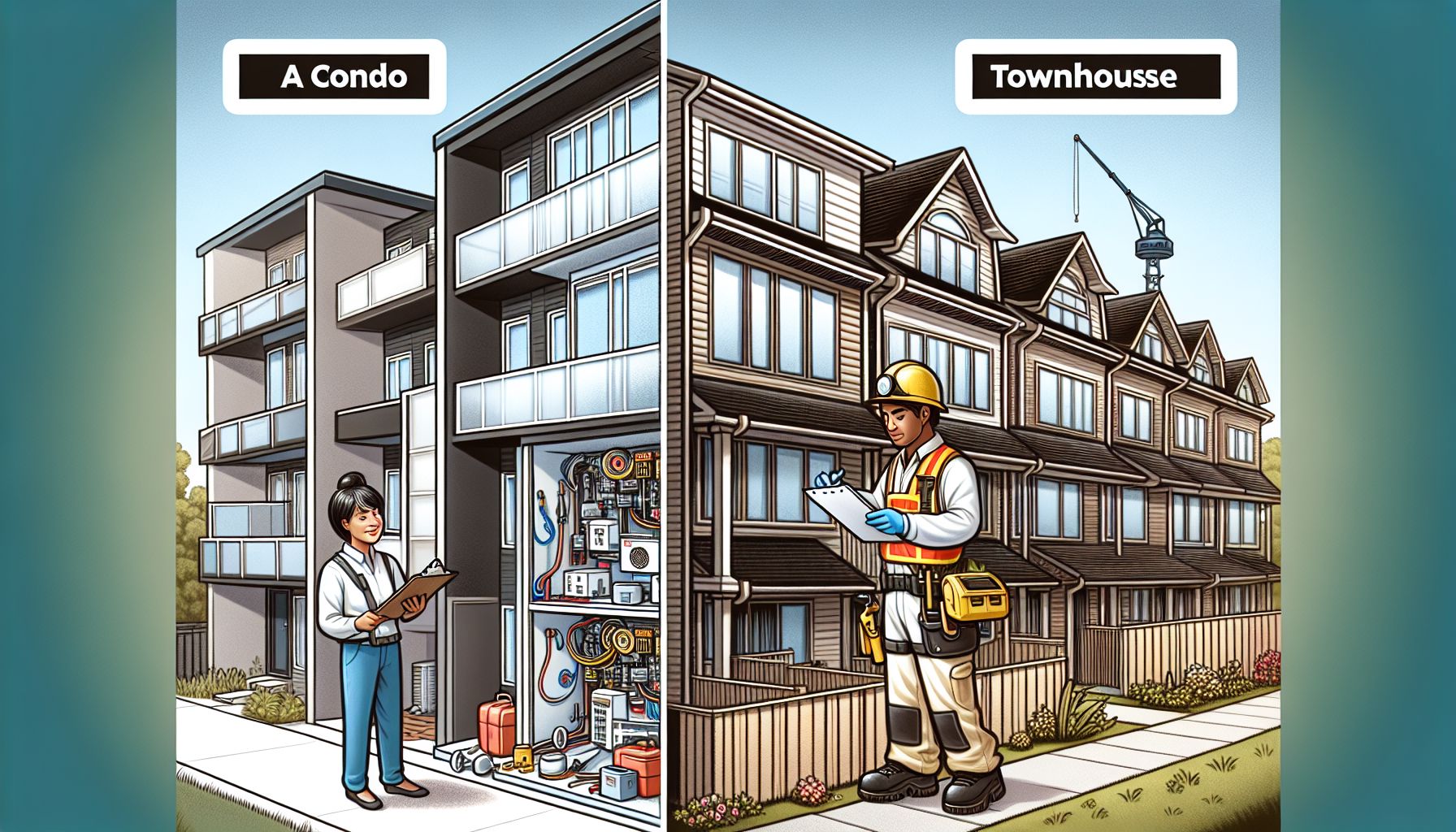
The Dynamics of Home Inspections
When buying a new home, one of the essential steps buyers often undertake is a home inspection. It provides a comprehensive overview of the property’s condition, ensuring that the investment they’re making is sound. However, the process and areas of focus can differ significantly depending on the type of property.
In condo and townhouse inspections, the process focuses on different aspects of the property compared to a traditional standalone family home. This article aims to elaborate on the unique nuances of condo and townhouse inspections and why understanding these differences is critical.

Broadening Your Understanding: Condo vs. Townhouse Inspections
Before diving into the differences, it’s crucial to understand what a condo and townhouse inspection involves. Both are multi-unit properties, but their structures and ownership setups cause distinctions in the inspection process.
Performing a condo and townhouse inspection means assessing the individual unit in question, not the entire building. Contrarily, standalone home inspections examine both the structure’s interior and exterior, inclusive of the roof, yard, and surrounding property, thereby highlighting the initial divergence.
Condominium Inspections
Condominiums, or condos, are part units in a building and typically involve collective ownership of common areas. When conducting a condo inspection, the inspector focuses on the specific unit’s infrastructure, including the plumbing, electrical systems, appliances, heating, and air conditioning.
It’s important to note that the inspection’s external elements, like the building’s exterior, roof, or common spaces, might be overseen by the homeowners association (HOA) rather than the individual owner. As a result, these are often exempt from the individual unit’s inspection. An inspector’s report, from a condo perspective, is likely smaller and more targeted compared to that of a standalone home.

Townhouse Inspections
Townhomes, though similar to condos in being multi-unit properties, often come with a unique layout. They are characteristically multi-level properties in a row, with the owners typically owning the land beneath and sometimes the small yard around the unit.
An inspection of a townhouse somewhat resembles that of a standalone home. More elements are inspected compared to a condo inspection, which include both the internal systems of the own unit and the exterior elements, including the roof and yard, if part of the property.
Having a clear understanding of what’s involved in a condo vs. townhouse inspection can empower you to make informed decisions.

Inspecting Shared Amenities and Systems
Both condos and townhouses often share amenities like pools, tennis courts, and gyms. While inspection of these shared assets typically isn’t the purview of the individual home buyer, understanding their current condition is still valuable. Although the HOA generally maintains them, deterioration or significant issues may result in higher HOA fees for residents to fund necessary repairs or replacements.
Similarly, shared systems such as plumbing, electrical, or HVAC that run through the entire building might not be directly inspected during a condo or townhouse inspection. However, a professional inspector can often assess potential issues from the individual unit and advise the potential buyer accordingly.
Wrapping Up: Condo and Townhouse Inspections
In conclusion, there are fundamental differences in conducting condo and townhouse inspections compared to standalone homes. It’s critical for buyers to understand these differences to know what to expect when scheduling an inspection and interpreting the findings.
To ensure a thorough and effective inspection, always hire a professional inspector with adequate experience and understanding of the unique nuances of condo and townhouse inspections.
Being prepared with an in-depth understanding of this process can help prospective buyers make the best decision for their future housing needs. Knowledge is power, and in the real estate world, it could also mean peace of mind and substantial savings.

